Address risk registers: safeguarding in field services
Safety intelligence about unsafe addresses sits fragmented across clients and agencies. A shared address risk register pools it, so nobody walks in blind.
Field agencies undertake millions of site visits each year. Most are routine. Some aren’t.
A hostile occupant. A repeat “no access” with escalating aggression. A postcode with a safety incident that nobody on your team knows about.
Right now, that intelligence is scattered. It lives in pockets across different agencies, client records, and local knowledge. By the time a new agent reaches that address, the context is gone.
The problem
When safety data is fragmented across clients and agencies, patterns go undetected. Operatives revisit dangerous situations. Incidents that could have been prevented happen instead.
A water company knows one set of unsafe addresses. An energy supplier knows another. A field agency keeps its own records. When an agent visits an address, nobody may know what the previous visitor learned, and the agent is the one bearing that risk.
The solution
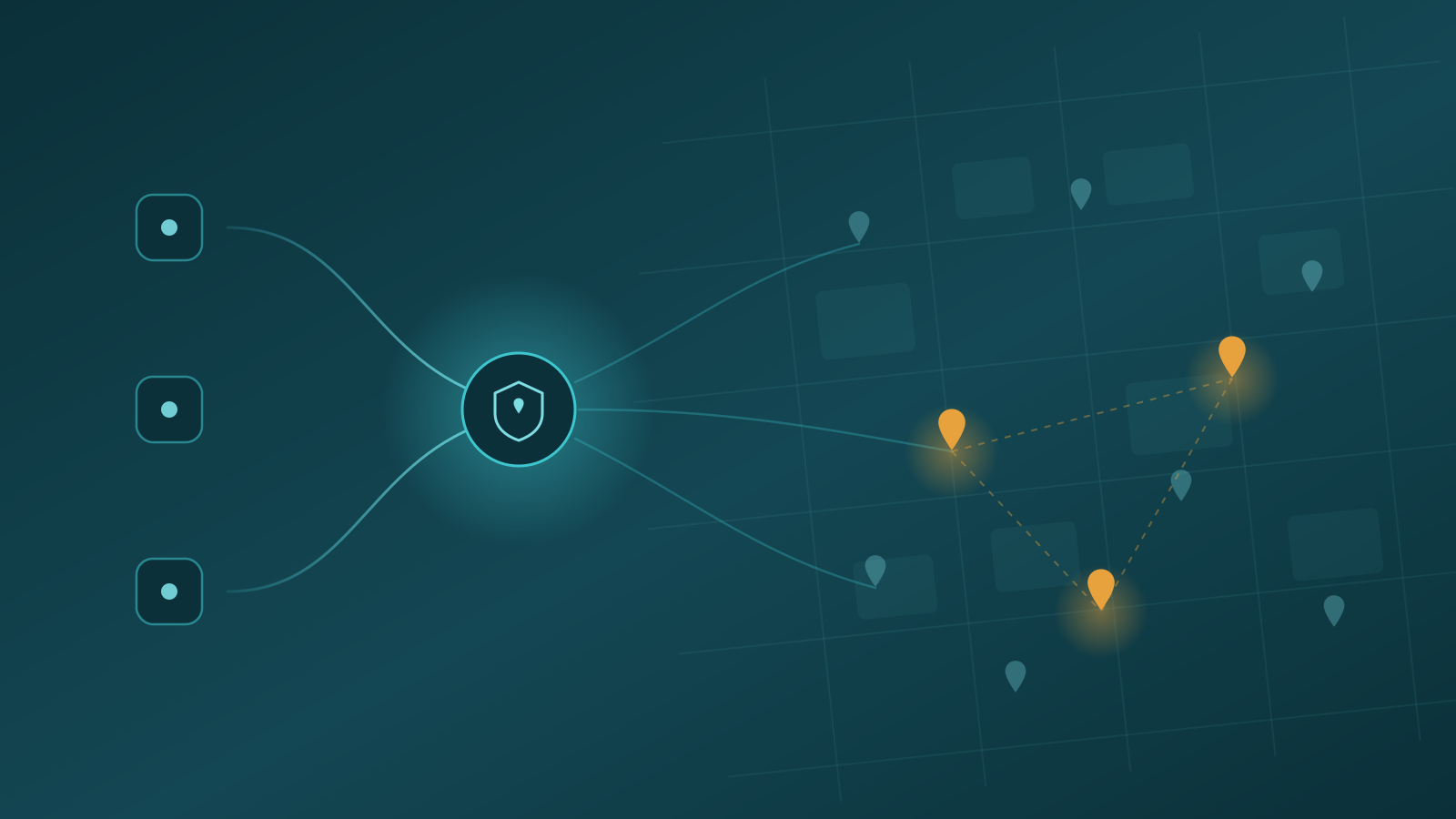
An address risk register is a centralised database of addresses identified as unsafe. It pools intelligence from three sources: agencies reporting field incidents, clients sharing their own incident data, and patterns emerging from visit volumes across different sectors.
How it works
Step 1: Detection
On load, every case is matched against the address risk register. A match doesn’t stop the work. It exceptions the case, holding it out of normal routing so the flag is dealt with by a person. The alternative is what happens today: the case passes silently down the line, and the first person to learn the address has a history is whoever knocks on the door.
Step 2: Review
The exceptioned case goes to the Innov-8 management team with the register entry attached: what was reported, when, and which source it came from. That context is the difference between “this address is a risk” and a decision somebody can actually act on.
Step 3: Communicate
We hold a logged discussion with the client about the particulars of the flag reason, then take the same detail to the agency or agencies involved. Logged is the operative word: it means the conversation, and the decision that came out of it, are auditable afterwards rather than remembered differently by each party.
Step 4: Action
Where all parties agree the case should proceed, the agency receives the full case notes, not just the flag, and sources the most appropriate field agent or agents for a bespoke site visit. This is the part that matters most: the visit still happens where it needs to happen, but it happens with the right people and, where applicable, a specialist strategy behind it.
Why it matters across sectors
Visibility across the residential and commercial sectors of energy, water, financial services and local authorities reveals patterns that no single sector could see alone. An address marked as a risk in water might be visited the following day by an energy supplier. That cross-sector intelligence catches safety patterns that would otherwise be missed.
Field agents stay safe, with no avoidable repeat surprises. Beyond that:
- Health and safety incidents reduce.
- Attrition rates across field operative services improve.
- Clients reduce their overall risk in field services and third-party management.
- Visits can still happen, but everyone is on the same page, and where applicable, specialist strategies can be deployed.
- Nobody is penalised for declining work on a risk-identified address.
Challenge, innovate, win
We promised that we’d change the way people think about field services, and that we’d make improvements through data and human collaboration.
This is another example of what we’re doing at Innov-8 to keep pushing the field services industry forward.
Ready to get started?
See Innov-8 in action.